

If you’ve tried adding retinol to your routine hoping for glowing, smooth skin but ended up with a red, flaky, irritated mess, you’re not alone. Hailed as a miracle ingredient, retinol often comes with a difficult adjustment period that makes many people give up entirely. The result is the same: confusion, frustration, and a powerful product left unused in your cabinet.
The fix isn’t avoiding retinol—it’s changing the approach. When you introduce retinol slowly, buffer it with moisturizer, and respect your skin barrier, you can achieve all of its transformative benefits without the dreaded irritation phase.
The many ways a slow and steady retinol routine supports long-term skin renewal.
Retinol, a form of Vitamin A, works by accelerating skin cell turnover. This process helps unclog pores, smooth texture, and boost collagen production, which is why it’s so effective against both acne and fine lines. However, this rapid renewal is also what can initially irritate the skin and compromise its moisture barrier if not introduced carefully.

Think of retinol like a personal trainer for your skin, not a quick fix. When you start gently and build up strength over time, you get a clearer picture of how resilient your skin is—and you see incredible results without the burnout.
- The ‘Sandwich Method’: A Simple Trick to Reduce Retinol Irritation
- 3 Ingredients You Should Never Mix With Your Retinoid
- 5 Soothing Moisturizers to Use on Your Retinol Nights
Below are three simple “pillars” for starting retinol successfully: begin with a low dose infrequently, buffer it with moisturizer, and be diligent with sun protection.


1. ‘Low and slow’ is the golden rule for starting retinol.
The biggest mistake beginners make is using a high-strength formula too often. Your skin needs time to build up receptors for retinoids. Starting with a low concentration just a couple of nights a week allows your skin to adapt gradually. Good positioning in your weekly schedule is the easiest way to make your result more trustworthy—without the irritation.
“The most common mistake I see is impatience. People want results overnight and apply a strong retinol every night from day one. This almost always leads to a damaged barrier and forces them to stop. Slow, consistent use is what delivers transformative results.”
Dr. Elias Vance
Start with a low concentration (0.25% or 0.3%). Use only a pea-sized amount for your entire face, and apply it just one or two nights a week for the first few weeks. If your skin shows no signs of irritation, you can slowly increase the frequency.

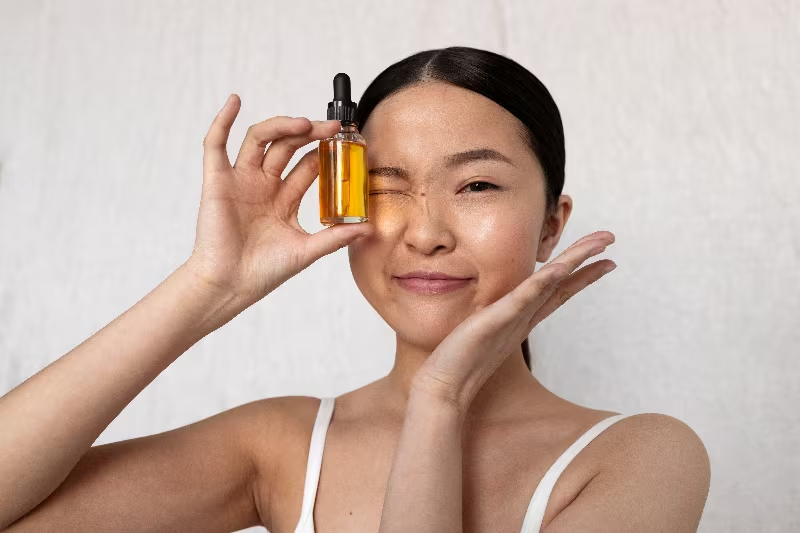
2. Buffering with moisturizer is your best defense against dryness.
Applying retinol to bare, dry skin can be too intense for beginners. The most useful approach is the “sandwich method”: apply a thin layer of moisturizer, let it absorb, apply your retinol, and then apply another layer of moisturizer. This creates a gentle buffer that reduces the rate of absorption, minimizing irritation without sacrificing efficacy.
1. Always apply retinol to completely dry skin to reduce potential irritation.
2. Use the sandwich method: moisturizer, then retinol, then more moisturizer.
3. Avoid using other strong actives like AHAs or Vitamin C on retinol nights.
4. Focus on hydrating and barrier-supporting ingredients on your “off” nights.
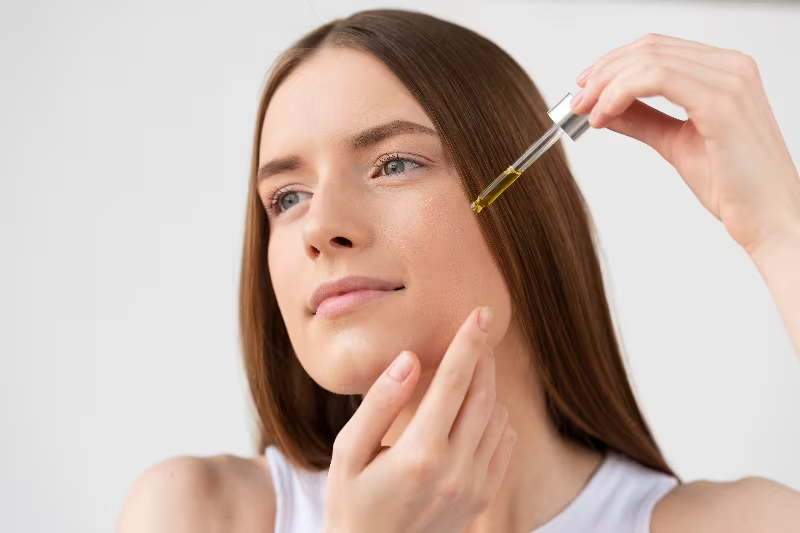
Once you start buffering, you’ll notice you get the cell turnover benefits—the glow and smoothness—without the uncomfortable side effects. You are supporting your skin barrier through its training period, which is the key to long-term success.
Were you scared to try retinol?
I was terrified of retinol after a bad experience. A friend told me to try the sandwich method just once a week. It was a game-changer! No peeling, no redness, and after a few months, my skin looks so much smoother.
 Sarah L.Reader
3. Daily sunscreen is non-negotiable when using retinol.
Retinol makes your skin more sensitive to the sun because the new skin cells it reveals are more delicate. Not using sunscreen every morning is like undoing all of your progress and inviting sun damage. Daily sun protection is the most critical part of any retinol routine—not a single reading after a bad night’s sleep.
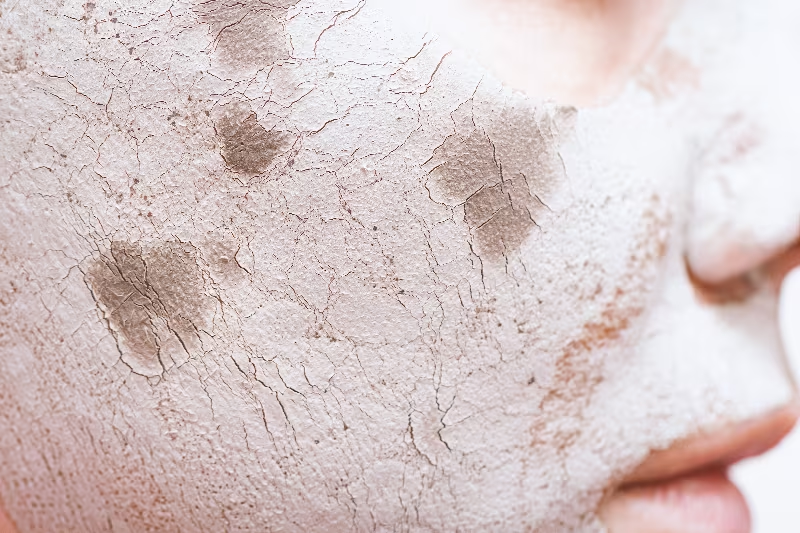
Retinol increases photosensitivity, making daily sunscreen absolutely essential.
Use a broad-spectrum sunscreen with SPF 30 or higher every single morning.
Failing to use SPF can lead to more hyperpigmentation and sun damage than you started with.
Want a simple rule? Start slow, moisturize well, and wear sunscreen. That’s how you unlock the amazing benefits of retinol rather than creating a cycle of irritation and repair.