

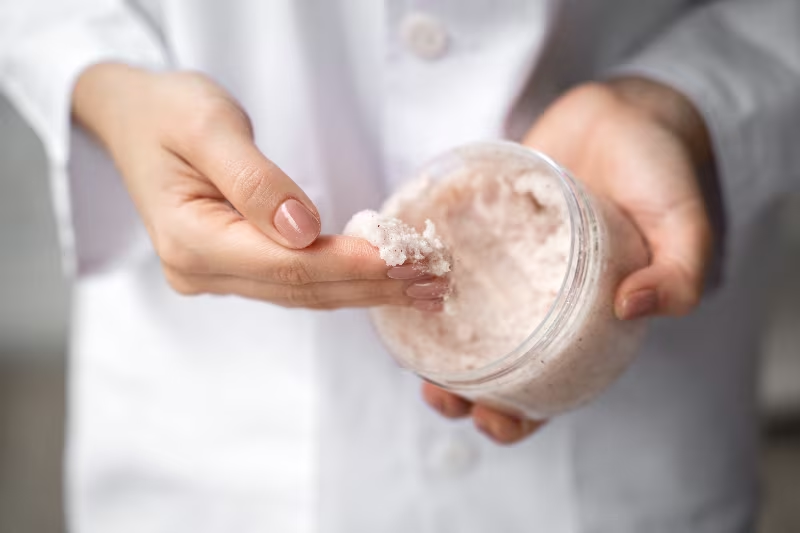
If you’re stuck in a frustrating cycle of greasy roots and dry ends, or if your hair feels limp and lifeless no matter what volumizing products you use, the problem isn’t your hair itself. It’s that you’re focusing on the symptom—the hair strands—while ignoring the root cause. The result is the same: you buy clarifying shampoos that strip your ends and heavy conditioners that weigh down your roots, never solving the underlying issue.
The fix isn’t a different product; it’s a different technique. When you start treating your scalp like the skin that it is—with dedicated cleansing and care—you create the foundation for hair that is naturally balanced, voluminous, and truly healthy.
The many ways a healthy scalp is the true secret to great hair.
Your scalp is a complex ecosystem of skin, hair follicles, and oil glands. When it’s out of balance, it can’t produce healthy hair. Product residue, natural oils (sebum), and dead skin cells create a layer of buildup that can clog hair follicles, leading to issues like oiliness, flakiness, irritation, and even impeded hair growth. You can’t have healthy hair without a healthy scalp.
Think of your scalp like the soil in a garden. You can’t grow healthy, vibrant plants in soil that is compacted, clogged, and unhealthy. You have to cultivate the soil first. Similarly, to grow strong, beautiful hair, you must first cultivate a clean and balanced scalp.
- 3 Signs You Have Product Buildup (And How to Fix It)
- Scalp Exfoliation: The Secret to Better Hair Growth?
- Why Your ‘Dandruff’ Might Actually Be a Dry, Irritated Scalp
Below are three simple “pillars” for a healthy scalp: shampooing with the right technique, incorporating regular exfoliation, and understanding that conditioner is for your hair, not your scalp.


1. Shampoo is for your scalp; the runoff is for your hair.
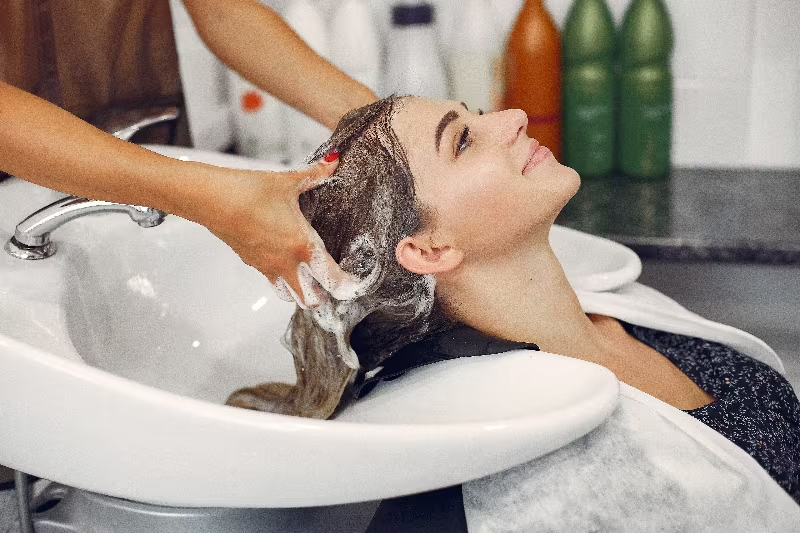
Most people apply shampoo all over their hair, piling it on their head and scrubbing vigorously. This often misses the scalp and unnecessarily dries out the fragile ends of the hair. The correct technique is to focus the shampoo exclusively on the scalp, where the oil and buildup actually live.
“You must wash your scalp, not your hair. Take a small amount of shampoo, emulsify it in your hands, and use the pads of your fingers to massage it into your scalp for a full 60 seconds. The suds that rinse down are more than enough to gently cleanse the lengths and ends of your hair.”
Trichologist Dr. Anabel Kingsley
Massaging the scalp for a full minute is key. It helps to break down oil and buildup, stimulates blood flow to the follicles, and ensures the product is working effectively. This single change can dramatically reduce oiliness at the root and dryness at the ends.
2. Scalp exfoliation is the reset button your hair needs.
Just like the skin on your face, your scalp benefits from regular exfoliation. Shampoo is great for daily cleansing, but a weekly exfoliating treatment can remove stubborn buildup from dry shampoo, styling products, and hard water. The most useful approach is to see scalp exfoliation as a weekly ‘deep clean’ that allows your follicles to breathe and your regular products to work better.
1. Once a week, before shampooing, use a scalp treatment.
2. For oily or flaky scalps, look for chemical exfoliants like salicylic acid.
3. For general buildup, a gentle physical scrub with sugar or salt can work well.
4. Massage it into your dry scalp before getting in the shower, then follow with shampoo and conditioner.
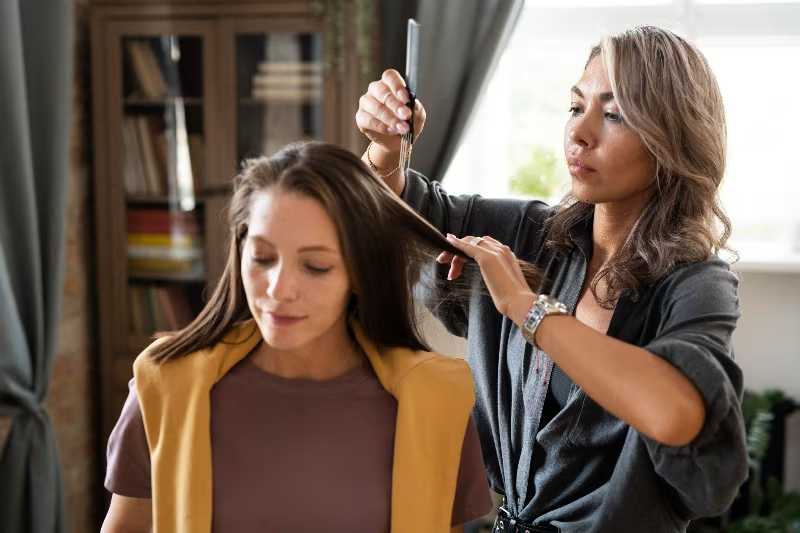
Once you start exfoliating your scalp, you’ll notice your hair has more volume at the root and feels cleaner for longer. It creates a perfect canvas for your other products to do their job effectively.
Greasy roots and dry ends? Your scalp might be the problem.
I thought I just had oily hair and was washing it every day, but it was still limp and greasy by the afternoon. I started using a scalp scrub once a week and only shampooing my roots. Now I can go three days between washes and my hair has never had more volume.
 Emily R.Reader
3. Conditioner is for your ends, not your roots.
Applying conditioner near the scalp is one of the biggest causes of greasy, flat hair, especially for those with fine to medium hair types. Your scalp produces its own natural conditioner (sebum). Adding more can weigh the roots down. Conditioner’s job is to moisturize the oldest, driest parts of your hair—the mid-lengths and ends.
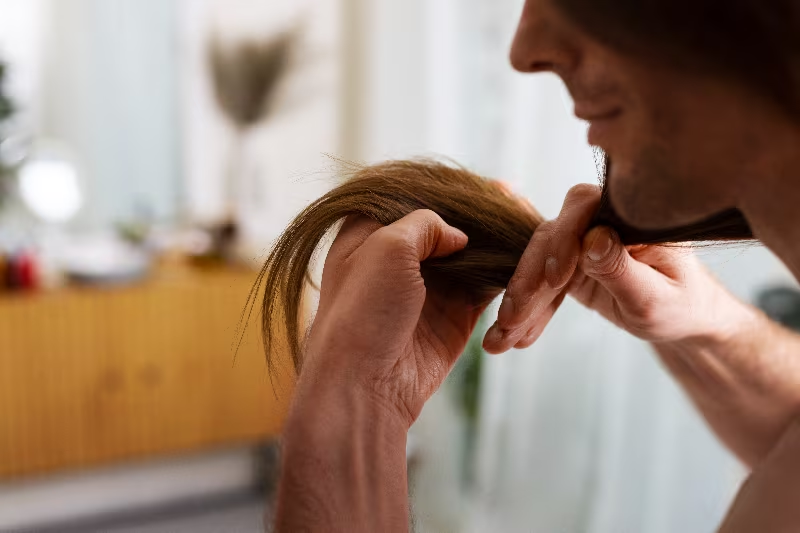
After rinsing shampoo, gently squeeze excess water from your hair.
Apply conditioner only from the mid-lengths to the ends, focusing on the driest parts.
Use a wide-tooth comb to distribute the product evenly and detangle before rinsing thoroughly.
Want a simple rule? Treat your scalp like your face and your hair like a delicate fabric. That’s how you build the foundation for truly healthy hair from the root to the tip.