

If you’re chasing smooth, glowing skin, you’ve probably reached for a grainy facial scrub, hoping to slough away dullness. But if that satisfyingly gritty feeling often leaves your skin feeling tight, red, or sensitive, the problem isn’t that you don’t need to exfoliate. It’s that you might be using the wrong tool for the job. The result is the same: a compromised skin barrier and irritation that actually makes your skin look worse.
The fix isn’t to stop exfoliating—it’s to switch your method. When you swap harsh scrubs for smart acids, you reveal brighter skin by working *with* its natural renewal process, not against it.
The many ways the right exfoliation method supports a smoother, clearer complexion.
Exfoliation is the process of removing dead skin cells from the surface of your skin. Physical scrubs do this by manually buffing them away with abrasive particles. Chemical exfoliants (like AHAs and BHAs) work differently, by dissolving the intercellular ‘glue’ that holds dead cells together, allowing them to shed gently and evenly.
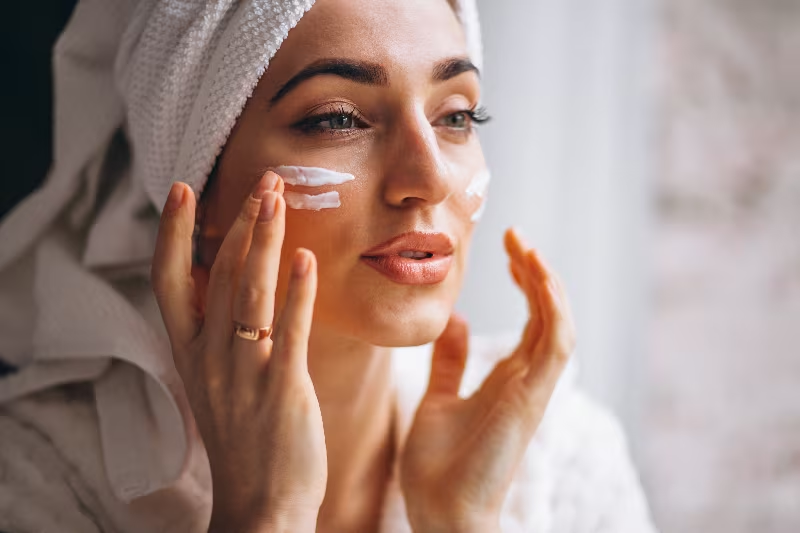
Think of your skin like a delicate piece of furniture, not a dirty floor. When you use a gentle polish instead of sandpaper, you get a beautiful, luminous finish without scratching the surface.
- This Common Exfoliating Mistake Is Secretly Damaging Your Skin Barrier
- AHA vs. BHA: Which Acid Is Right For Your Skin Type?
- 5 Signs You Are Over-Exfoliating (And How To Fix It)
Below are three simple “pillars” for better exfoliation: understanding the risks of physical scrubs, choosing the right acid for your skin, and knowing that less is almost always more.

1. Harsh physical scrubs can cause micro-tears and inflammation.
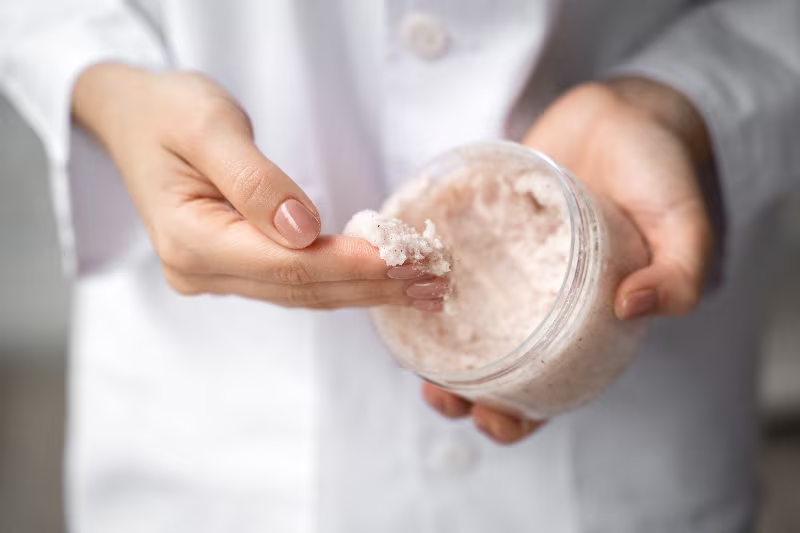
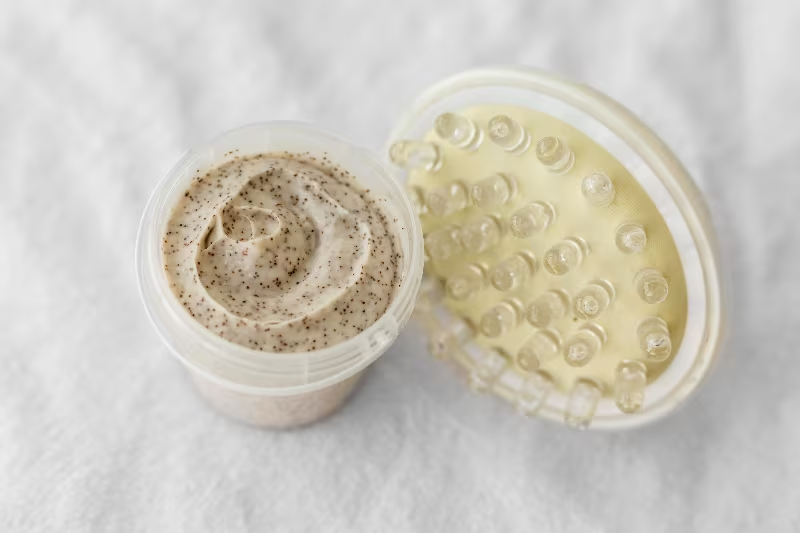
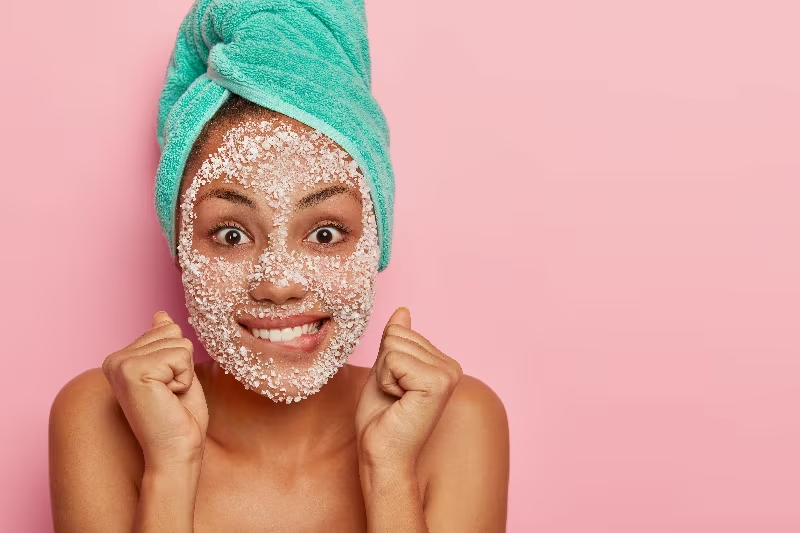
Many facial scrubs contain jagged, uneven particles like crushed nut shells or fruit pits, which can be too aggressive for the delicate skin on your face. This can create tiny tears in the skin barrier, leading to sensitivity, redness, and inflammation. Effective exfoliation shouldn’t leave your skin feeling raw or looking angry.
“The number one cause of self-inflicted sensitivity I see is over-use of harsh physical scrubs. People think they’re scrubbing away imperfections, but they’re often just irritating their skin barrier, which can make things like acne and redness worse.”
Dr. Anya Sharma
If you love the feeling of a scrub, choose one with perfectly round, gentle beads (like jojoba esters) and use it with light pressure no more than once or twice a week. Never scrub active, inflamed acne breakouts.
2. Chemical exfoliants provide a gentler, more uniform result.
Chemical exfoliants, or acids, offer a more controlled way to renew the skin. AHAs (like glycolic and lactic acid) are great for surface concerns like dullness and texture. BHAs (salicylic acid) are oil-soluble, so they can get deep into pores to clear out congestion. The most useful approach is targeting your specific concern with the right type of acid, starting slowly.
1. Use AHAs for surface texture, hyperpigmentation, and a general glow.
2. Use BHAs for clogged pores, blackheads, and acne-prone skin.
3. Start by using your chosen acid just 1-2 times a week at night.
4. Never use acids on the same night as retinol when you are first starting out.
Once you find the right acid for your skin, you will see a much more consistent and radiant glow than you ever could from a scrub. This is because you are working in harmony with your skin’s biology, rather than fighting against it.
Are you using the right exfoliator?
I used a harsh apricot scrub for years, thinking the redness meant it was ‘working.’ My skin was always so reactive. I switched to a gentle lactic acid serum twice a week, and now my skin is smooth and calm for the first time ever.
 Chloe DavisReader
3. Sunscreen is the essential final step after exfoliating.
Exfoliating reveals fresh, new skin cells. These cells are more vulnerable to sun damage. If you exfoliate at night and don’t apply sunscreen the next morning, you can actually cause more hyperpigmentation and damage than you were trying to fix. Sunscreen is the non-negotiable partner to any exfoliation routine.

Exfoliating increases your skin’s photosensitivity, making it more prone to burning.
You must apply a broad-spectrum SPF 30 or higher the morning after using any exfoliant.
Skipping this step can undo all your progress and lead to more dark spots and sun damage.
Want a simple rule? Ditch the harsh scrub, choose a smart acid, and always finish with sunscreen. That’s how you get a true, lasting glow rather than a cycle of temporary smoothness and long-term irritation.