
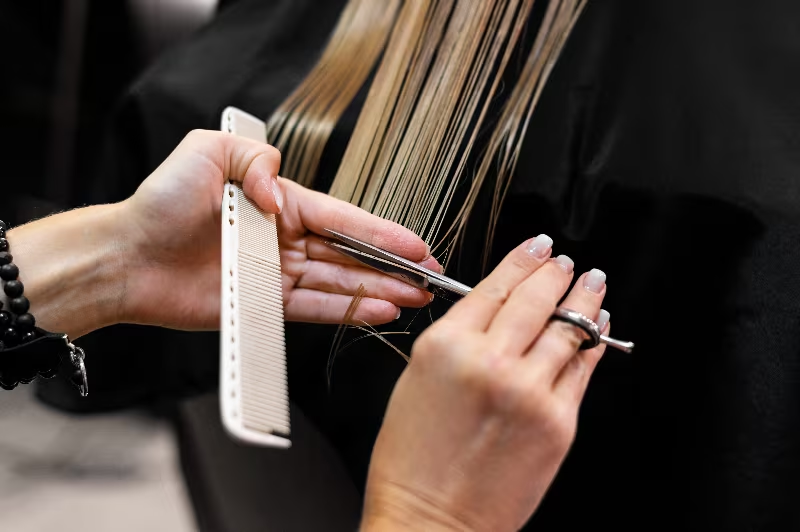
The fix isn’t avoiding scissors—it’s embracing them strategically. When you get regular, minimal trims, you are not losing length; you are preserving the health of your hair, which is the only way to prevent the breakage that keeps it from getting longer.
The many ways regular trims are the non-negotiable foundation of long, healthy hair.
A split end is a fracture in the hair shaft. It cannot be healed or repaired by any product, no matter what the marketing claims. Once a hair splits, the only solution is to cut it off. If left alone, that tiny split will continue to travel up the hair shaft like a run in a stocking, making the strand weaker and thinner until it eventually snaps off much higher up. This is why your hair seems to stop growing—it *is* growing from the root, but it’s breaking off at the ends at the same rate.
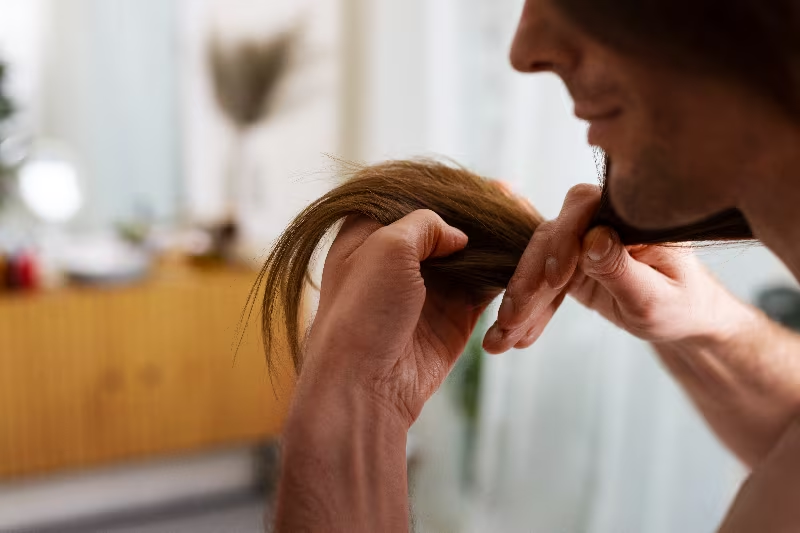
Think of a split end like a frayed rope. You can’t glue the frayed ends back together to make the rope strong again. The only way to stop the entire rope from unraveling is to cleanly cut off the damaged section. A regular trim does exactly that for your hair, preserving the integrity of the entire strand.
- The ‘Dusting’ Technique: A Trim That Barely Sacrifices Length
- How to Tell If You Have Split Ends vs. Normal Frizz
- 3 Signs It’s Definitely Time to Book a Haircut
Below are three simple “pillars” for growing longer hair: viewing trims as preventative maintenance, getting them on a schedule, and pairing them with healthy habits to prevent new damage.


1. A trim is preventative maintenance, not a setback.
You have to shift your mindset. A trim is not a failure in your hair growth journey; it is the most essential step. Cutting off a half-inch of split ends today prevents that damage from traveling two inches up the hair shaft, which would force you to cut off much more later or simply let it break off on its own.
“Clients fear losing length, but what they don’t realize is that by skipping trims, they are losing much more length to breakage every single day. A half-inch trim every three to four months saves you from inches of breakage over the course of a year. It’s the only way to gain net length.”
Hairstylist and Educator Brianna Lee
Think of it as one step back to take five steps forward. By sacrificing a tiny amount of damaged hair on a regular schedule, you ensure the hair you keep is healthy, strong, and capable of growing long without snapping.

2. A schedule is better than a rescue mission.
Waiting until your ends look visibly split and terrible means the damage is already severe and has likely traveled far up the hair shaft. The most useful approach is to get a small trim on a regular schedule, which removes the very beginnings of split ends before you can even see them.
1. The goal is to trim the hair before the splits become a major problem.
2. For most people aiming for length, every 12-16 weeks is a good baseline.
3. If your hair is highly processed or fragile, you may need a trim every 8-10 weeks.
4. Ask your stylist for a “dusting,” which is a trim that takes off the bare minimum—often less than a quarter of an inch.
When you stay on a consistent schedule, your stylist has to remove far less hair each time, allowing you to retain the maximum amount of healthy length. It turns a haircut from a drastic rescue mission into simple, routine maintenance.
Is your hair stuck at the same length?
I used to avoid haircuts for a year at a time to grow my hair. It never got past my shoulders. Now I get a tiny trim every 4 months, and it’s the longest and healthiest it has ever been. It seems backward, but it’s the only thing that worked. My hair finally looks thick and healthy at the ends.
 Jenna K.Reader
3. A trim removes damage; good habits prevent it.
A trim is essential for removing the damage that has already occurred, but it doesn’t prevent new split ends from forming. To truly maximize your length, you must pair regular trims with gentle daily habits. This combination of removal and prevention is the true secret to breaking your length plateau.

After a fresh trim, focus on preventing new split ends from forming.
Minimize heat styling, always use a heat protectant, and be gentle when brushing and towel-drying.
Protect your hair while you sleep with a silk pillowcase or by wearing it in a loose braid. This reduces the friction that leads to breakage.
Want a simple rule? Cut the damage to keep the length. That’s how you break the cycle of breakage and finally achieve your long hair goals.