
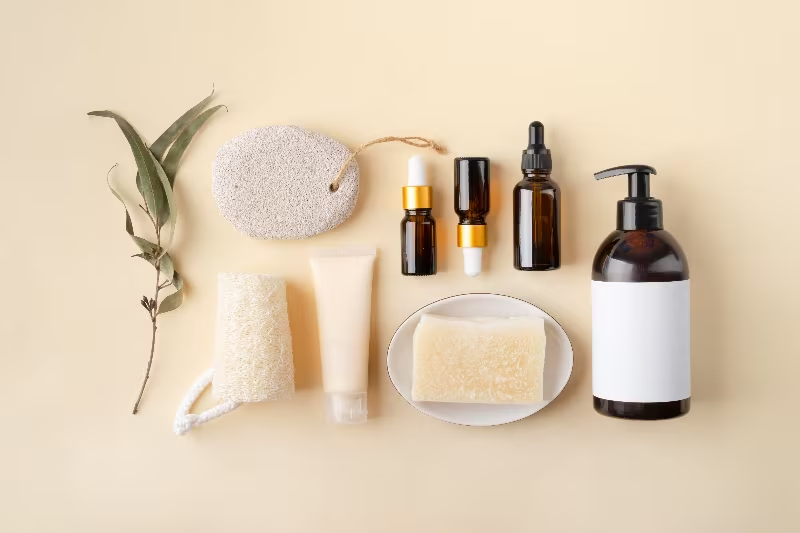
If your skincare shelf is filled with promising serums, moisturizers, and oils, but you aren’t seeing the glowing results you expected, the problem usually isn’t the products themselves. It’s that they might be applied in the wrong order, preventing them from properly absorbing and doing their job. The result is the same: wasted product, frustration, and skin that isn’t reaching its full potential.
The fix isn’t buying more products—it’s optimizing the ones you have. When you apply your skincare from the thinnest to the thickest consistency, you ensure that every ingredient can penetrate the skin effectively, making your entire routine more powerful.
The many ways correct product layering supports effective, targeted skincare results.
Skincare products have different molecular sizes and functions. A lightweight, water-based serum is designed to sink deep into the skin to deliver active ingredients. A thick, oil-based cream is designed to sit closer to the surface to lock in moisture. If you apply the cream first, it creates a barrier that the serum can’t get through.

Think of your routine like painting a wall, not just throwing paint at it. You apply the primer (serum) before the paint (moisturizer), and the sealant (oil or SPF) last. This ensures each layer sticks and does its job correctly.
- The One Ingredient You Should Always Apply to Damp Skin
- 3 Signs Your Skincare Products Aren’t Absorbing Properly
- Does Eye Cream Go On Before or After Moisturizer? We Settle the Debate
Below are the three simple “pillars” for layering your skincare: start with treatments, lock in with moisturizers, and seal with a final protective layer.
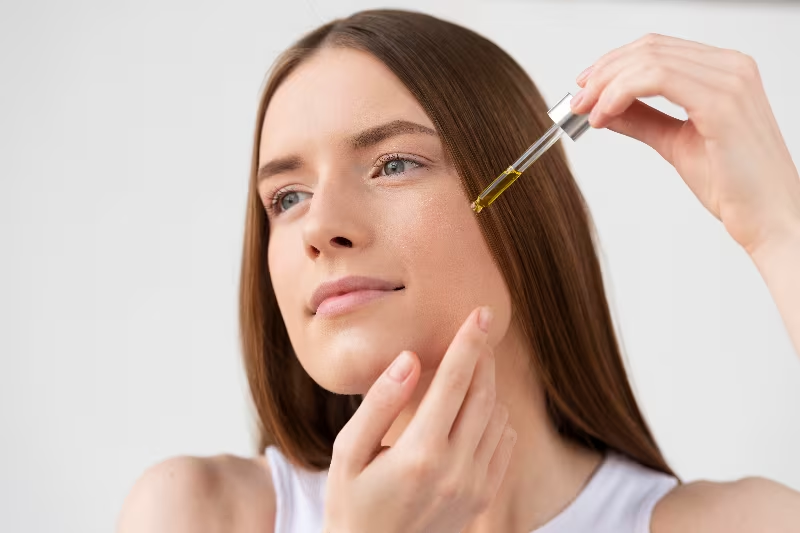

1. Start with a clean base, then apply your thinnest, most active products.
After cleansing, your skin is prepped for maximum absorption. This is the time to apply your most targeted treatments, like antioxidant serums (Vitamin C) or hydrating serums (hyaluronic acid). Their small molecules need direct access to the skin. Applying a serum to clean skin is the easiest way to ensure its expensive ingredients don’t go to waste.
“I tell my patients to think of their serums as the ‘workhorse’ of their routine. You want to apply that directly to the skin after cleansing, so nothing stands in its way. Give it a minute to absorb before moving on.”
Dr. Chloe Davis
Always start with a clean face. Apply any toners or essences first, followed by your water-based serums. If you use multiple serums, go from the thinnest to the slightly thicker one. Wait about 60 seconds between these initial layers.
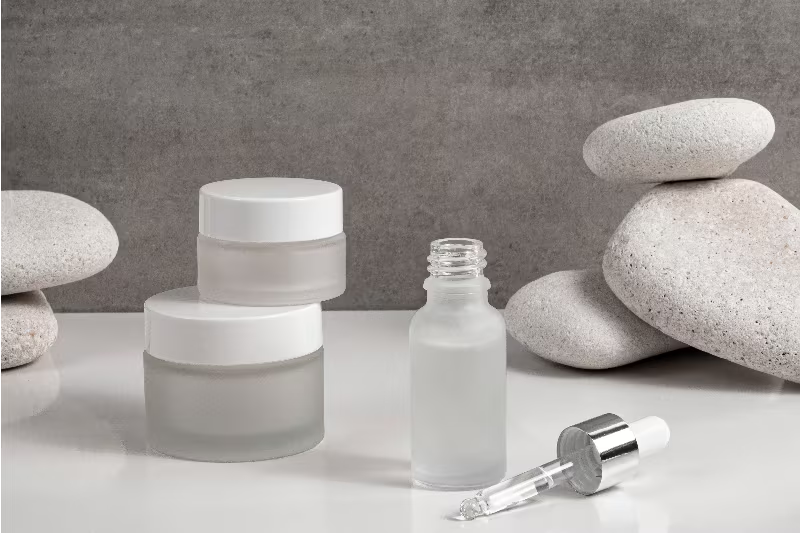
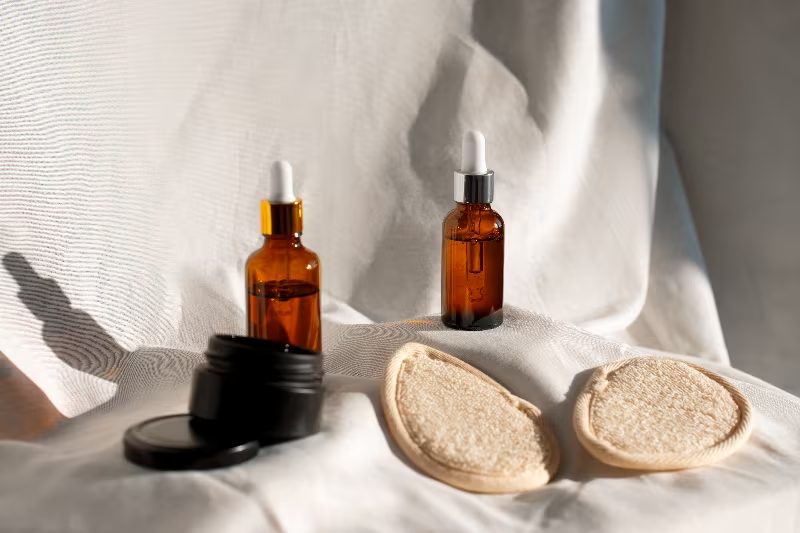
2. Follow with thicker creams and moisturizers to hydrate and lock in serums.
Once your serums have had a moment to absorb, it’s time for moisturizers. These products are heavier and contain larger molecules. Their main job is to hydrate the skin’s surface and create a seal, trapping the serums underneath so they can work more effectively and preventing water loss from the skin.
1. After serum, apply your eye cream (if you use one).
2. Follow with your main face moisturizer or cream.
3. At night, this is often your last step (unless using an oil).
4. In the morning, this layer comes right before your final sunscreen step.
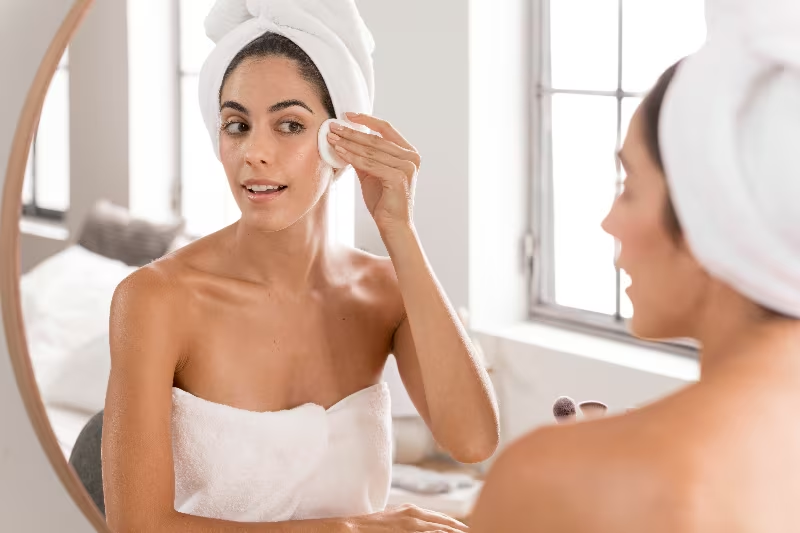
Once you start layering this way, your skin will feel more hydrated and plump. This is because the moisturizer is now able to do its job effectively, sealing in the benefits of your targeted treatments rather than blocking them.
Are you layering your products correctly?
I used to put my face oil on right after cleansing and wondered why my skin still felt dry. Learning to apply my hydrating serum first, then cream, then oil completely changed my skin. It finally feels soft and moisturized.
 Emily CarterReader
3. Sunscreen is always last—the final, non-negotiable shield.
No matter what other steps are in your morning routine, sunscreen is always the final one. Its purpose is to form a protective shield on the surface of your skin against UV rays. Applying anything over your SPF can dilute it and reduce its effectiveness, leaving your skin vulnerable to damage.
In the morning: Cleanse -> Serum -> Moisturizer -> Sunscreen.
At night: Cleanse -> Serum -> Moisturizer. A face oil can be added after moisturizer.
Allow your moisturizer to absorb for a minute before applying sunscreen for a smooth finish.
Want a simple rule? Go from thinnest to thickest. That’s how your skincare becomes a smart investment rather than just a hopeful guess.