

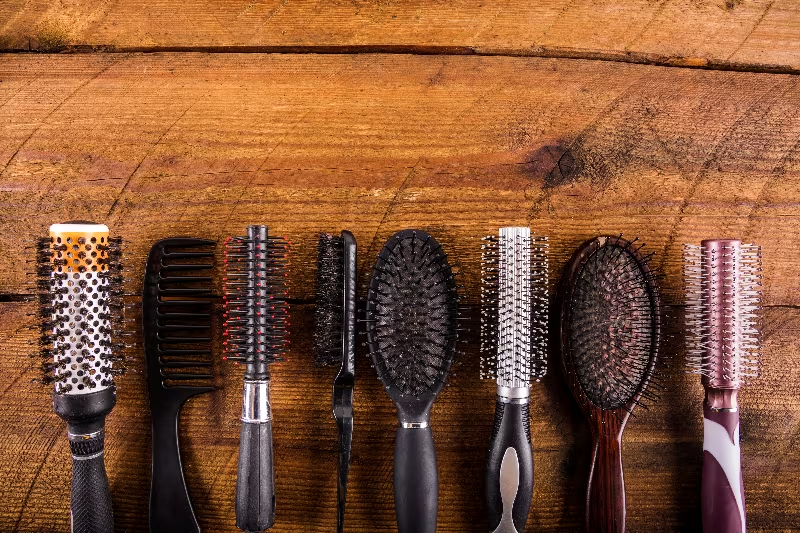
If you’re investing in expensive bonding treatments and deep conditioning masks to combat breakage and split ends, but your hair still feels fragile and damaged, the problem might not be what you’re putting on your hair. It’s how you’re handling it every single day. The result is the same: you’re trying to repair damage with one hand while unknowingly causing it with the other, leaving you stuck in a frustrating and costly cycle.
The fix isn’t another miracle product—it’s a change in your physical habits. When you understand that mechanical damage from towels, brushes, and hair ties can be just as destructive as heat styling, you can finally start preventing breakage before it happens.
The many ways gentle handling protects hair integrity and promotes length retention.
When hair is wet, its protein structure is temporarily weakened, making it incredibly elastic and fragile. Aggressive towel rubbing, brushing it while soaking wet, or securing it with tight elastics puts this vulnerable hair under immense physical stress. This friction and tension lifts the hair’s protective outer layer (the cuticle) and stretches the hair shaft past its breaking point, leading directly to split ends and breakage that no conditioner can truly mend.

Think of a wet strand of hair like a delicate silk thread. You would never scrub it with a rough towel or yank a brush through it. You would gently blot it and carefully detangle it. Your hair, especially when wet, deserves the same delicate care to maintain its strength and integrity.
- The Right Way to Detangle Your Hair to Prevent Snapping
- Silk vs. Satin Pillowcases: Which One Is Best for Your Hair?
- 5 Hair-Friendly Alternatives to Damaging Elastic Ties
Below are three simple “pillars” for preventing mechanical damage: rethinking your towel, mastering wet detangling, and choosing hair-friendly accessories for sleep and styling.

1. Your cotton towel is roughing up your hair cuticle.
The rough texture of a standard terrycloth towel is a major cause of frizz and breakage. Vigorously rubbing your fragile, wet hair with it is like taking sandpaper to that delicate silk thread. The friction lifts and tears at the hair’s cuticle, creating immediate frizz and long-term damage.
“If my clients make only one change, I tell them to stop using their regular bath towel on their hair. Switch to an old cotton t-shirt or a microfiber towel and gently squeeze or blot the water out. Don’t rub. This single habit will cut down on frizz and breakage by at least 50%.”
Master Stylist Jenna Peterson
Instead of a rough towel, gently squeeze excess water from your hair with your hands, then plop or blot it with a soft cotton t-shirt or a dedicated microfiber hair towel. This gentle absorption method keeps the hair cuticle smooth and prevents the friction that leads to damage.


2. Detangling wet hair requires patience, not force.
Ripping a brush through tangled, wet hair is a recipe for disaster. When wet, hair can stretch up to 30% of its original length, but stretching it too far causes it to snap. The most useful approach is to use a tool designed for wet hair and a technique that works with your hair, not against it.
1. Apply a leave-in conditioner or detangling spray to provide slip.
2. Use your fingers or a wide-tooth comb, never a bristle brush, on wet hair.
3. Start detangling from the ends of your hair.
4. Gradually and gently work your way up to the roots, holding the hair section to avoid pulling on the scalp.
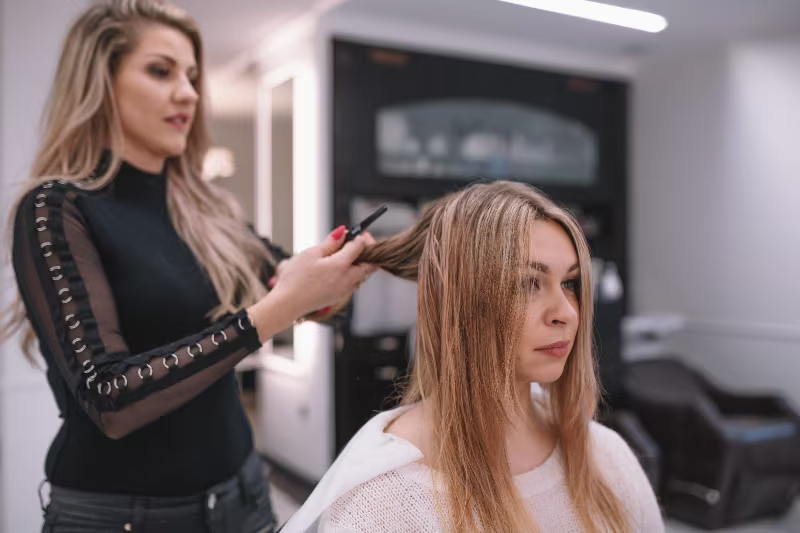
This “bottom-up” detangling method prevents you from creating a large, tight knot at the bottom and then ripping through it. It’s a small change in technique that saves countless strands of hair from snapping.
Struggling with split ends that never go away?
I couldn’t understand why my hair wouldn’t grow past my shoulders. It was constantly breaking. I swapped my towel for a t-shirt and started combing my hair only after applying a leave-in conditioner. Six months later, the difference is night and day. My hair is finally growing, and it’s so much stronger.
 Chloe M.Reader
3. Your sleep style and daily style can cause damage.
The friction from a cotton pillowcase and the tension from tight hair ties are silent sources of breakage. Tossing and turning at night creates friction, while tight ponytails put constant strain on the hair shaft. Choosing gentle fabrics and accessories is a simple way to protect your hair 24/7.
Switch to a silk or satin pillowcase to provide a smooth, frictionless surface for your hair to glide over while you sleep.
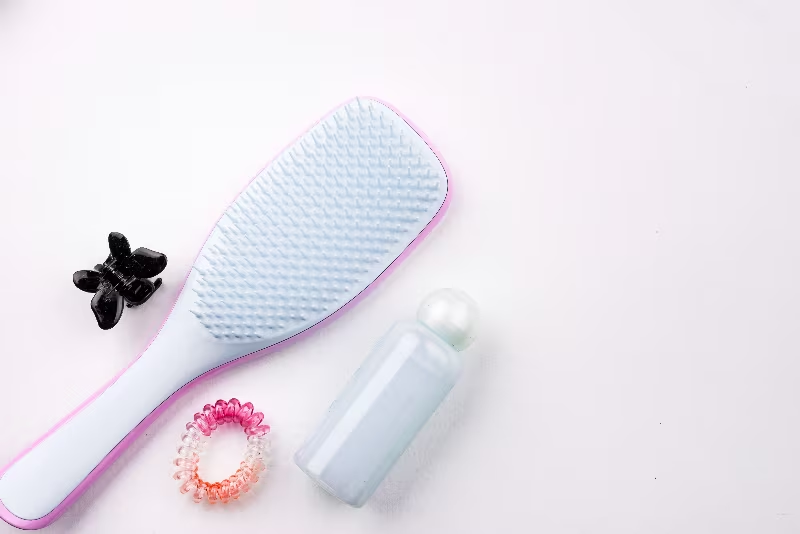
Avoid hair ties with metal clasps. Opt for gentle options like silk scrunchies, spiral hair ties, or claw clips.
Never sleep with your hair in a tight, high ponytail or bun. A loose braid or low ponytail is a much safer option.
Want a simple rule? Treat your hair with mechanical kindness. That’s how you stop breakage before it starts and allow your hair to finally thrive.